AL NUHA INTERNATIONAL

Oman Fawtara E-Invoicing:
How the 5-Corner Model Works

Home / Blogs

Latest updates
  • All Posts

As Oman moves toward mandatory electronic invoicing under the Fawtara initiative, businesses are increasingly asking one important question: How does the Oman E-Invoicing system actually work?

Unlike traditional invoicing, where businesses simply generate an invoice and send it directly to customers, the Fawtara framework introduces a structured digital process that validates, exchanges, and reports invoice data electronically.

The system is designed to improve tax transparency, reduce manual errors, strengthen VAT compliance, and support real-time data exchange between businesses and the Oman Tax Authority (OTA).

In this guide, we explain the complete invoice journey, the Five-Corner Model, supported invoice formats, technical requirements, and what businesses should know before implementing Oman E-Invoicing.

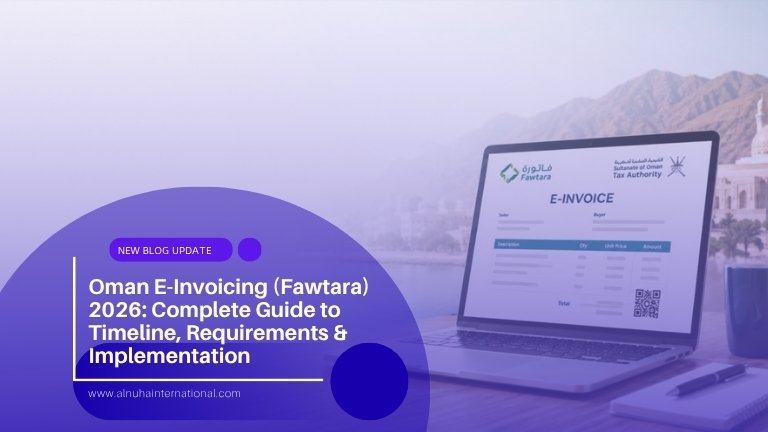
Related Reading: New to Oman E-Invoicing? Start with our Oman E-Invoicing (Fawtara) 2026: Complete Guide to Timeline & Requirements for a comprehensive overview of the implementation roadmap.

What Is the Fawtara E-Invoicing System?

Fawtara is the national electronic invoicing platform introduced by the Oman Tax Authority (OTA) to digitize invoice generation, exchange, and reporting for VAT-registered businesses.

Instead of relying on paper invoices or simple PDF documents, businesses will issue invoices electronically using their accounting or ERP systems. These invoices are exchanged through accredited service providers using standardized formats, allowing automated validation and secure transmission.

The Fawtara framework is based on the internationally recognized Peppol network, enabling secure communication between businesses while supporting real-time tax reporting and compliance.

Understanding the Five-Corner Model

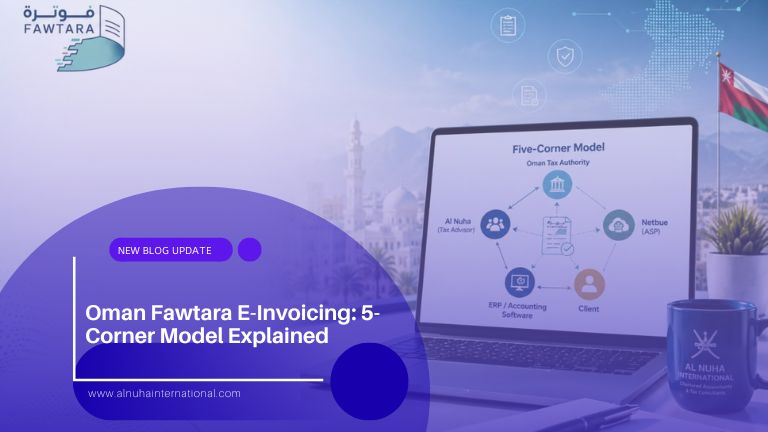
Oman’s e-invoicing framework follows a Five-Corner Model, where multiple participants work together to validate and exchange invoice data securely.

Unlike a traditional two-party exchange between a seller and a buyer, the Five-Corner Model introduces accredited service providers and the Oman Tax Authority into the invoice lifecycle.

Corner Participant Role
Corner 1
Supplier (Seller)
Generates the electronic invoice through an ERP or accounting system.
Corner 2
Supplier’s Accredited Service Provider (ASP)
Validates the invoice and transmits it through the Peppol network.
Corner 3
Buyer’s Accredited Service Provider
Receives the validated invoice and delivers it to the buyer.
Corner 4
Buyer
Receives the electronic invoice for processing and recordkeeping.
Corner 5
Oman Tax Authority (OTA)
Receives invoice-related tax data for compliance and monitoring purposes.

This decentralized model enables standardized invoice exchange while improving security, interoperability, and transparency.

Want a deeper understanding of how Oman’s Fawtara E-Invoicing System works?

Step-by-Step Invoice Process

The Fawtara system follows a structured workflow from invoice creation to tax reporting.

Step 1: Invoice Generation

The supplier creates an invoice using an ERP, accounting, or billing system. The invoice must follow the technical specifications defined by the Oman Tax Authority and include all mandatory invoice information.

Step 2: Validation by the Service Provider

The invoice is transmitted to the supplier’s accredited service provider (ASP), which performs validation checks to ensure the invoice complies with technical and business requirements before transmission.

Step 3: Invoice Exchange

After successful validation, the invoice is securely transmitted through the Peppol network to the buyer’s accredited service provider.

Step 4: Buyer Receives the Invoice

The buyer receives the validated electronic invoice and can process it automatically within their accounting or ERP system, reducing manual data entry and improving efficiency.

Step 5: Tax Reporting

At the same time, invoice-related tax data is transmitted to the Oman Tax Authority through the Fawtara framework, supporting regulatory oversight and VAT compliance.

Invoice Formats Under the Fawtara Framework

One of the most significant changes introduced by Oman E-Invoicing is the use of structured electronic invoice formats.

According to the published technical guidance, invoices are expected to comply with PINT OM specifications and use standardized electronic formats that support machine-readable processing.

The supported formats include:

Format Purpose
XML (UBL 2.1)
Primary structured invoice format for electronic exchange.
PDF/A-3
Human-readable invoice format that can embed structured XML data.

Unlike traditional PDF invoices, these formats enable automated validation, integration with ERP systems, and digital processing throughout the invoice lifecycle.

What Is PINT OM?

PINT OM (Peppol International Invoice Model – Oman) is the technical specification developed for Oman’s e-invoicing framework.

It defines how invoice data should be structured, validated, and exchanged between businesses while maintaining compatibility with the global Peppol network.

For businesses, PINT OM establishes a standardized approach to electronic invoicing, helping ensure consistency and interoperability across different accounting and ERP systems.

Key Information Included in an E-Invoice

Electronic invoices issued under the Fawtara framework are expected to include essential business and tax information.

Typical invoice data includes:

  • Seller information
  • Buyer information
  • VAT Identification Numbers (VATIN)
  • Invoice number
  • Invoice date
  • Product or service details
  • VAT rate
  • VAT amount
  • Total invoice value
  • Unique invoice identifiers

Accurate master data is critical to ensure invoices meet validation requirements and support reliable tax reporting.

Why Standardized Invoice Formats Matter

Standardized electronic invoices provide significant benefits compared to manually created invoices or static PDF documents.

Businesses can benefit from:

  • Automated invoice processing.
  • Improved data accuracy.
  • Reduced manual entry.
  • Faster invoice exchange.
  • Better ERP integration.
  • Improved VAT reporting.
  • Simplified audit processes.

Standardization also enables seamless communication between different accounting systems, regardless of the software used by buyers and sellers.

How Al Nuha International Can Help

Implementing Oman E-Invoicing requires coordination between finance, tax, and technology teams. Beyond technical integration, businesses must ensure that their invoicing processes comply with VAT regulations and align with the requirements issued by the Oman Tax Authority.

At Al Nuha International, we support businesses by providing:

  • E-Invoicing readiness assessments
  • VAT compliance reviews
  • Accounting system evaluations
  • Financial process reviews
  • ERP gap assessments
  • Tax advisory services
  • Finance team guidance
  • Ongoing compliance support

Our experienced professionals help organizations prepare for regulatory changes while reducing implementation risks and strengthening financial governance.

Frequently Asked Questions

The Five-Corner Model is the framework used by Oman’s Fawtara system for the secure generation, validation, exchange, and reporting of electronic invoices among suppliers, buyers, accredited service providers, and the Oman Tax Authority.

PINT OM is the technical specification that defines how electronic invoices should be structured and exchanged within Oman’s e-invoicing framework.

Businesses covered by the mandatory rollout will need to comply with the electronic invoicing requirements applicable to their implementation phase.

Not necessarily. Businesses should evaluate whether their existing accounting or ERP systems can support the required electronic invoice standards or whether enhancements are needed.

Conclusion

The Fawtara e-invoicing system introduces a standardized and secure approach to invoice exchange in Oman, helping businesses improve operational efficiency while supporting VAT compliance and digital transformation.

Understanding the Five-Corner Model, invoice formats, and technical workflow is an important step toward successful implementation. By preparing early and reviewing existing accounting systems, businesses can reduce implementation challenges and transition smoothly to the new framework.

If your business requires assistance with e-invoicing readiness, VAT compliance, or accounting process reviews, Al Nuha International can provide practical advisory support to help you prepare for Oman’s evolving tax landscape.

Related Reading: If you’re new to Oman’s e-invoicing initiative, start with our Oman E-Invoicing (Fawtara) 2026: Complete Guide to Timeline, Requirements for an overview of the regulations and compliance requirements.