AL NUHA INTERNATIONAL

The Ultimate Guide to Oman E-Invoicing
Implementation Phases (2026–2027)

Home / Blogs

Latest updates
  • All Posts

The Oman Tax Authority (OTA) is introducing Fawtara, the national e-invoicing system, through a phased implementation strategy that allows businesses to transition gradually instead of requiring all taxpayers to comply on a single date.

This phased approach gives organizations time to assess their accounting systems, prepare their finance teams, review business processes, and implement the technical requirements necessary for electronic invoicing.

Whether your organization is a large enterprise, an SME, or a government entity, understanding when your business is required to comply is the first step toward successful implementation.

In this guide, we explain Oman’s e-invoicing implementation phases, who is covered in each phase, how to determine your rollout period, and the practical steps businesses should take to prepare for compliance.

Related Reading: If you’re new to Oman’s e-invoicing initiative, start with our Oman E-Invoicing (Fawtara) 2026: Complete Guide to Timeline, Requirements for an overview of the regulations and compliance requirements.

Why Is Oman Implementing E-Invoicing in Phases?

The introduction of a nationwide e-invoicing system represents a significant change for businesses across Oman. Rather than requiring every VAT-registered taxpayer to adopt the new system simultaneously, the Oman Tax Authority has chosen a phased rollout.

This approach provides businesses with sufficient time to:

  • Review existing accounting and ERP systems.
  • Prepare financial and tax data.
  • Implement technical integrations.
  • Test invoice generation and transmission processes.
  • Train finance, tax, and IT teams.
  • Resolve operational issues before mandatory compliance.

A gradual rollout also enables the Tax Authority to monitor implementation, gather feedback, and ensure the Fawtara platform operates efficiently as more businesses join the system.

Oman E-Invoicing Implementation Timeline

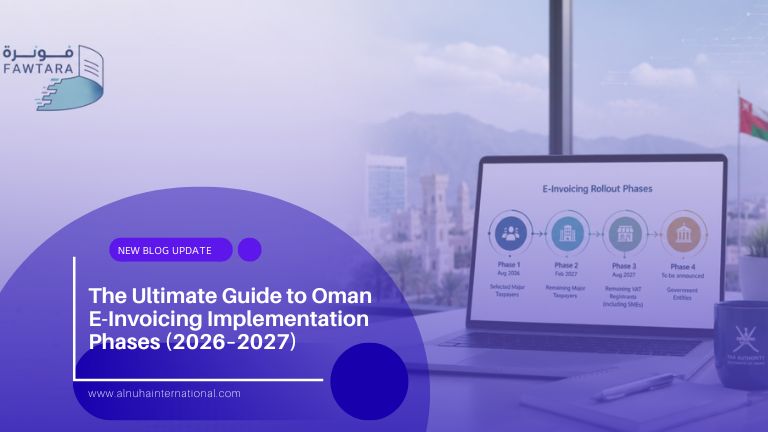
According to the Oman Tax Authority’s implementation roadmap, Fawtara will be introduced through four phases.

Phase Implementation Period Applicable Businesses
Phase 1
August 2026
Selected major VAT-registered taxpayers
Phase 2
February 2027
Remaining major VAT-registered taxpayers
Phase 3
August 2027
All remaining VAT-registered businesses, including SMEs
Phase 4
Date to be announced
Government entities and institutions

Each phase expands the scope of the e-invoicing mandate while giving businesses adequate preparation time before becoming subject to the new requirements.

Phase One: Selected Major Taxpayers (August 2026)

The first phase marks the official launch of Oman’s e-invoicing system.

Beginning in August 2026, the Oman Tax Authority will require a selected group of large VAT-registered businesses to issue electronic invoices through the Fawtara framework.

These organizations have been identified by the Tax Authority based on its rollout strategy and are expected to complete their readiness activities before the implementation date.

Businesses included in this phase should focus on:

  • Reviewing existing accounting and ERP systems.
  • Conducting technical readiness assessments.
  • Validating customer and VAT master data.
  • Completing integration with their chosen e-invoicing solution.
  • Performing system testing before going live.
  • Training finance and IT teams on the new invoicing process.

For organizations in Phase One, August 2026 should represent the completion of implementation—not the beginning of the project.

Phase Two: Remaining Major Taxpayers (February 2027)

The second implementation phase begins in February 2027 and extends the e-invoicing requirement to the remaining major VAT-registered taxpayers.

Large organizations often operate:

  • Multiple branches.
  • Complex ERP environments.
  • High transaction volumes.
  • Integrated finance systems.
  • Multiple invoicing workflows.

Because of this complexity, implementation may involve reviewing existing business processes, mapping invoice data, upgrading software, and coordinating with multiple internal departments.

Businesses covered under Phase Two should begin planning several months before the mandatory implementation date to minimize operational disruption.

Phase Three: Remaining VAT-Registered Businesses (August 2027)

The third phase, scheduled for August 2027, will include the remaining VAT-registered businesses that were not covered under the earlier phases.

This stage is expected to involve the largest number of taxpayers, including:

  • Small and medium-sized enterprises (SMEs)
  • Service providers
  • Retail businesses
  • Trading companies
  • Professional service firms
  • Businesses using standard accounting software

Although implementation occurs later, businesses should avoid delaying preparations until the deadline approaches.

Early planning allows sufficient time to:

  • Verify customer information.
  • Review VAT registration records.
  • Organize product and service data.
  • Evaluate accounting software capabilities.
  • Identify system upgrades if required.
  • Train employees on the new process.

Starting early reduces implementation risks and avoids unnecessary pressure during the final stages of rollout.

Phase Four: Government Entities

The final phase will cover government ministries, authorities, and public institutions.

While the Oman Tax Authority has announced that government entities will be included in the rollout, the official implementation year has not yet been confirmed.

Organizations should continue monitoring official announcements for future updates regarding this phase.

How Can Businesses Check Their Implementation Phase?

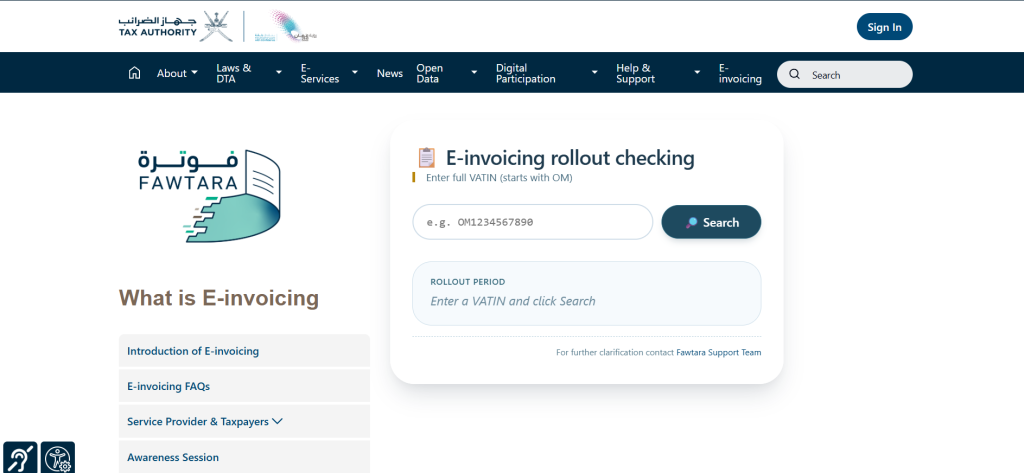
The Oman Tax Authority (OTA) provides an official E-Invoicing Rollout Checker that allows VAT-registered businesses to verify their assigned implementation phase. By entering your VAT Identification Number (VATIN), beginning with “OM”, you can instantly see when your business is scheduled to transition to the Fawtara e-invoicing system.

Visit the official Oman Tax Authority (OTA) E-Invoicing Rollout Checker to find out when your business is required to implement Fawtara: https://tms.taxoman.gov.om/portal/rollout-checking

Figure 1: Official Oman Tax Authority (OTA) E-Invoicing Rollout Checker. Businesses can enter their VATIN to confirm their assigned implementation phase under the Fawtara e-invoicing rollout.

Why Businesses Should Prepare Early

Waiting until the weeks before your implementation deadline can create unnecessary operational and technical challenges.

Implementing e-invoicing is not simply a software upgrade—it often requires reviewing and improving the entire invoicing process.

Businesses may need to:

  • Evaluate accounting software capabilities.
  • Review invoice approval workflows.
  • Validate VAT and customer master data.
  • Improve internal controls.
  • Upgrade ERP integrations.
  • Conduct system testing.
  • Train finance, tax, and IT teams.

The earlier businesses begin these activities, the smoother the transition is likely to be.

Business Readiness Checklist

  • Before your implementation phase begins, consider the following checklist:
  • Confirm your implementation phase.
  • Review your accounting or ERP system.
  • Verify customer and supplier master data.
  • Validate VAT registration numbers.
  • Assess invoice workflows.
  • Identify technical gaps.
  • Select a suitable e-invoicing solution.
  • Complete integration testing.
  • Train employees.
  • Monitor Oman Tax Authority updates.

Preparing early helps reduce implementation risks and improves compliance readiness.

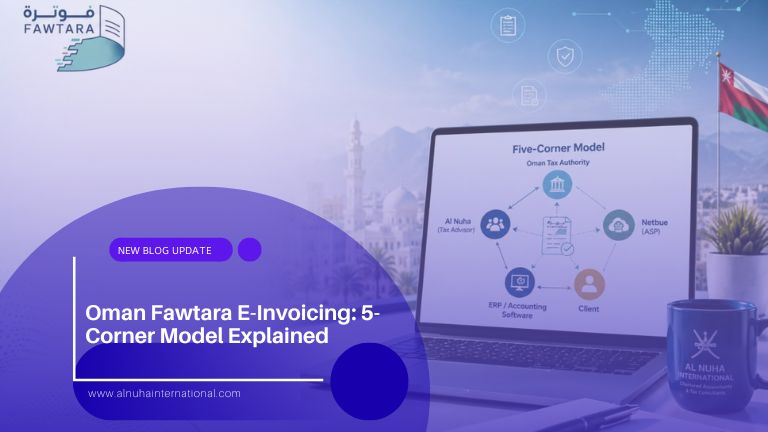
Related Reading: Learn more about invoice formats, technical requirements, and the Five-Corner Model in our How the Oman Fawtara E-Invoicing System Works guide.

Common Mistakes Businesses Should Avoid

Many organizations underestimate the level of preparation required for e-invoicing implementation.

Some common mistakes include:

  • Waiting until the implementation deadline.
  • Assuming existing software is fully compliant.
  • Ignoring data quality issues.
  • Failing to involve finance and IT teams.
  • Skipping testing before implementation.
  • Treating e-invoicing as purely an IT project rather than a business-wide compliance initiative.

Avoiding these mistakes can significantly reduce implementation challenges.

How Al Nuha International Can Support Your Business

Preparing for Oman E-Invoicing requires more than installing software. Businesses should ensure their accounting processes, VAT compliance procedures, and financial controls align with the new regulatory framework.

we help businesses prepare for e-invoicing through practical advisory and compliance services, including:

  • E-Invoicing readiness assessments.
  • VAT compliance reviews.
  • Accounting system evaluations.
  • ERP and finance process reviews.
  • Gap analysis and implementation planning.
  • Finance team guidance.
  • Ongoing tax advisory support.

Our experienced professionals work with businesses across Oman to help them navigate regulatory changes with confidence and strengthen their overall compliance framework.

Frequently Asked Questions

The first implementation phase begins in August 2026 for selected major VAT-registered taxpayers.

Yes. The Oman Tax Authority plans to extend the e-invoicing mandate to all VAT-registered businesses through a phased rollout.

Businesses can verify their assigned phase using the official VATIN-based phase checker provided by the Oman Tax Authority.

No. Even if implementation occurs later, SMEs should begin reviewing their accounting systems and business processes well in advance.

Businesses should identify any software limitations early and work with their software provider or implementation partner to address them before their mandatory compliance date.

Conclusion

The phased rollout of Oman’s Fawtara e-invoicing system gives businesses valuable time to prepare for one of the country’s most significant tax digitalization initiatives. However, successful implementation depends on early planning rather than last-minute action.

By understanding your implementation phase, reviewing your systems, and strengthening your internal processes, your business can achieve a smoother transition while minimizing compliance risks.

If your organization needs guidance on e-invoicing readiness, VAT compliance, or accounting system reviews, Al Nuha International is ready to help you prepare for the transition with practical, professional advisory services tailored to your business needs.

Related Reading: If you’re new to Oman’s e-invoicing initiative, start with our Oman E-Invoicing (Fawtara) 2026: Complete Guide to Timeline, Requirements for an overview of the regulations and compliance requirements.